
From little machine-gun tanks to the mighty King Tiger, here’s how Germany’s armored vehicles changed—and what those changes mean for us scale modelers.
When somebody says “German Panzer,” most people picture a Tiger or a Panther. Big guns, thick armor, and enough steel to make your display shelf nervous! But the story started with much smaller machines.
During World War II, German tank designs evolved in response to changing combat needs, enemy vehicles, and the realities of industrial production. It wasn’t a neat ladder where every new tank replaced the previous one. Different designs served alongside one another, and the Tiger I actually entered combat before the Panther.
Grab your coffee, put the unfinished kit aside for a few minutes (it’ll still be there!), and let’s get into it.
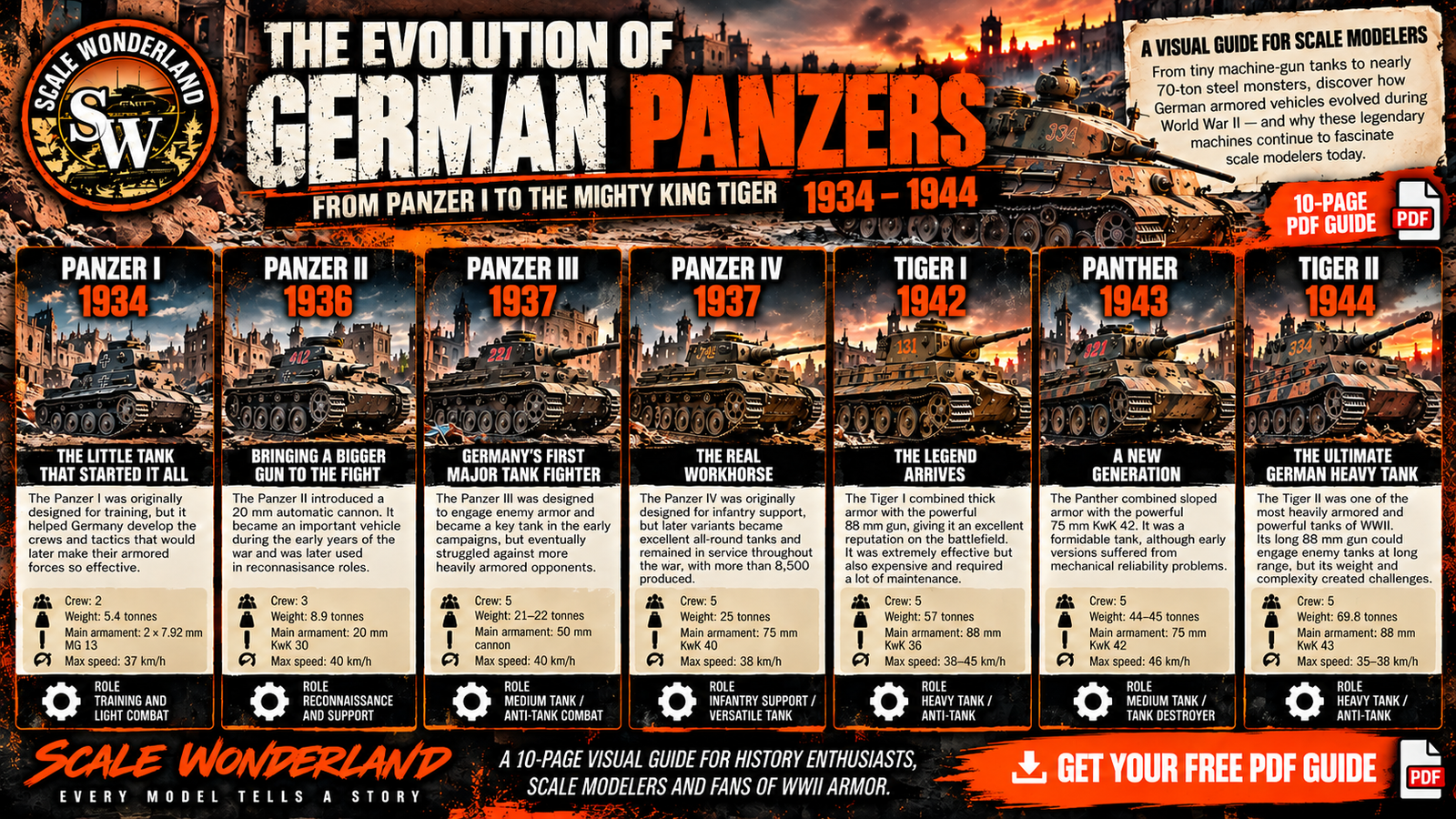
Get Your FREE Panzer Evolution Guide
Explore seven legendary German WWII tanks, their history, specifications and scale-modeling inspiration. Your free 10-page guide is delivered by email.
Panzer I — The Humble Beginning
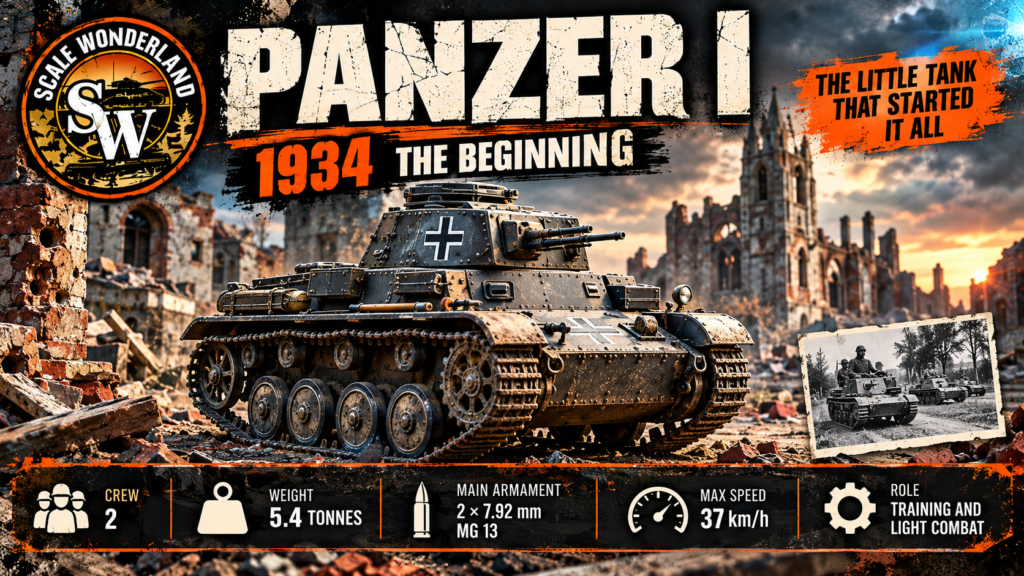
The Panzer I entered German service in the mid-1930s as a training and development vehicle. Its two machine guns made it unsuitable for fighting other tanks, but shortages of more capable vehicles pushed it into combat in Poland and France. The Panzer I shows how Germany’s armored force began with doctrine and crew training rather than impressive hardware.
At a glance: Panzer I Ausf. A: two crew; about 5.4 tonnes; two 7.92 mm machine guns.
Scale Wonderland modeling tip: For a Poland 1939 scene, keep the weathering grounded: road dust, subtle wear around hatches and tools, and a believable early-war setting.
Panzer II — The Interim Light Tank
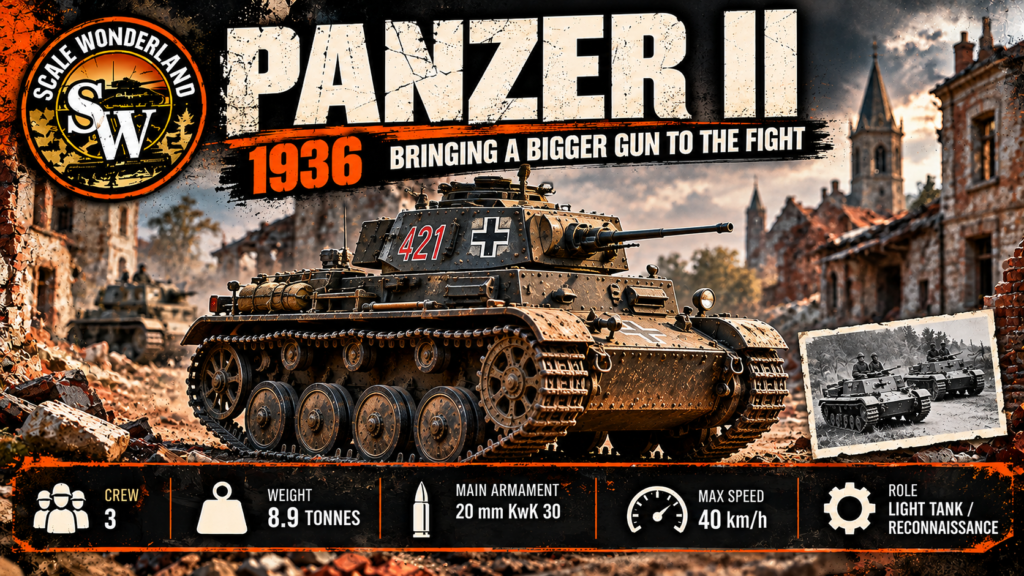
With a 20 mm automatic cannon, the Panzer II was a meaningful step up in firepower, though it was still lightly armored. It served prominently in the early campaigns before more capable medium tanks became available in quantity. Later specialized Panzer II variants were used for reconnaissance.
At a glance: Panzer II Ausf. C: three crew; approximately 8.9 tonnes; 20 mm KwK 30 cannon.
Scale Wonderland modeling tip: A France 1940 roadside diorama is a great excuse to experiment with dust, road grime, and restrained chipping.
Panzer III — Designed to Fight Tanks
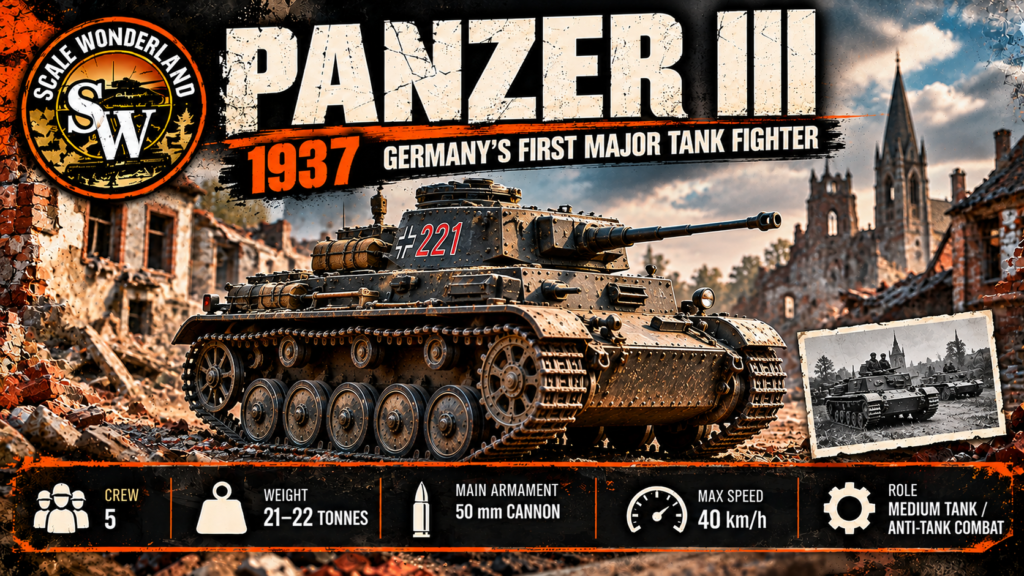
The Panzer III was conceived to engage enemy armor. Its three-man turret let the commander concentrate on the battle instead of also serving the gun. Early vehicles carried a 37 mm gun, while many later variants mounted 50 mm guns. As Soviet armor improved, the Panzer III’s potential for further upgrades became limited.
At a glance: Representative later gun tanks: five crew; roughly 20–23 tonnes; 50 mm gun. The Ausf. N instead carried a short 75 mm gun.
Scale Wonderland modeling tip: Research your exact variant before buying aftermarket parts: gun length, running gear, and fittings changed throughout production.
Panzer IV — The Versatile Workhorse
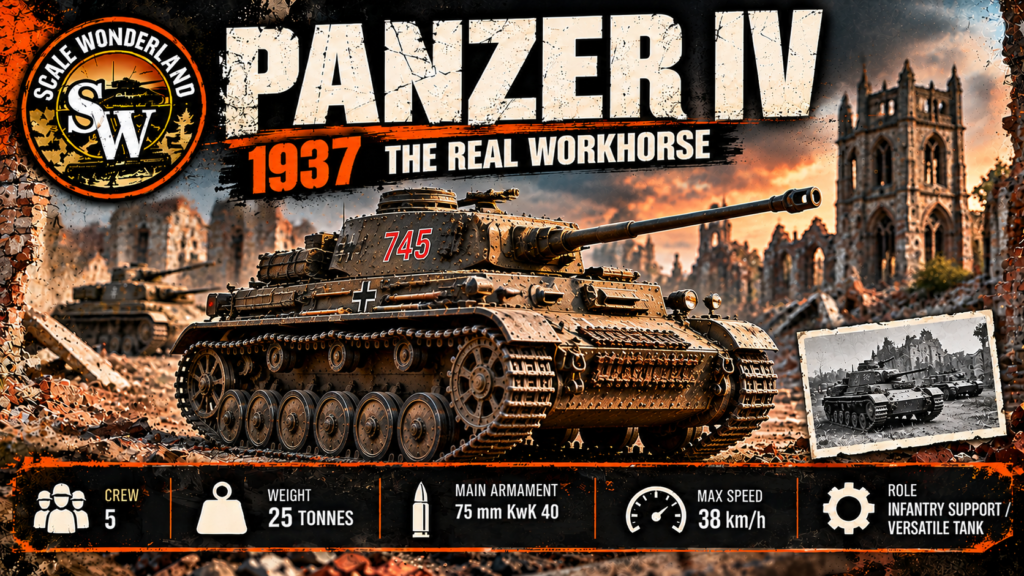
Originally intended for fire support with a short 75 mm gun, the Panzer IV evolved into a capable tank fighter with a long 75 mm gun. It served from the beginning to the end of the war and became Germany’s most numerous turreted tank. The differences between early and late variants make it a fascinating subject in miniature.
At a glance: Panzer IV Ausf. H: five crew; around 25 tonnes; 75 mm KwK 40 L/48.
Scale Wonderland modeling tip: Schürzen side skirts, spare track links, and field stowage offer plenty of opportunities to tell a specific vehicle’s story.
Tiger I — Heavy Armor, Heavy Demands
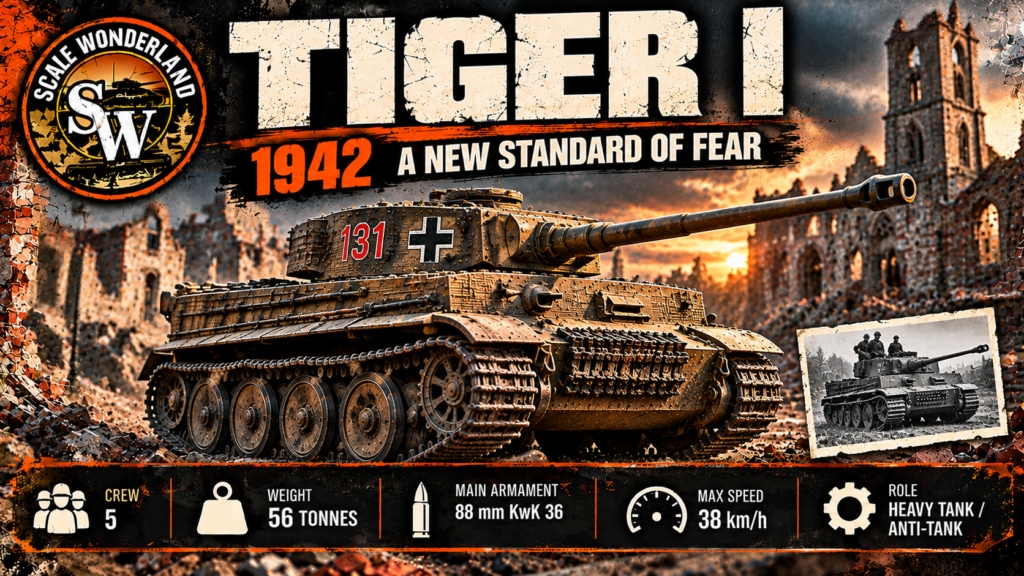
The Tiger I entered combat in 1942. Its 88 mm KwK 36 gun and substantial armor gave it formidable battlefield capabilities, but high manufacturing costs, maintenance demands, and logistical difficulties limited its broader impact. It was a powerful tank—not a magic solution to every battlefield problem.
At a glance: Five crew; about 57 tonnes; 88 mm KwK 36 L/56.
Scale Wonderland modeling tip: An early Tiger and a late Tiger are not interchangeable. Check wheels, exhausts, cupola, and other production details before committing to a paint scheme.
Panther — A Response to the Eastern Front
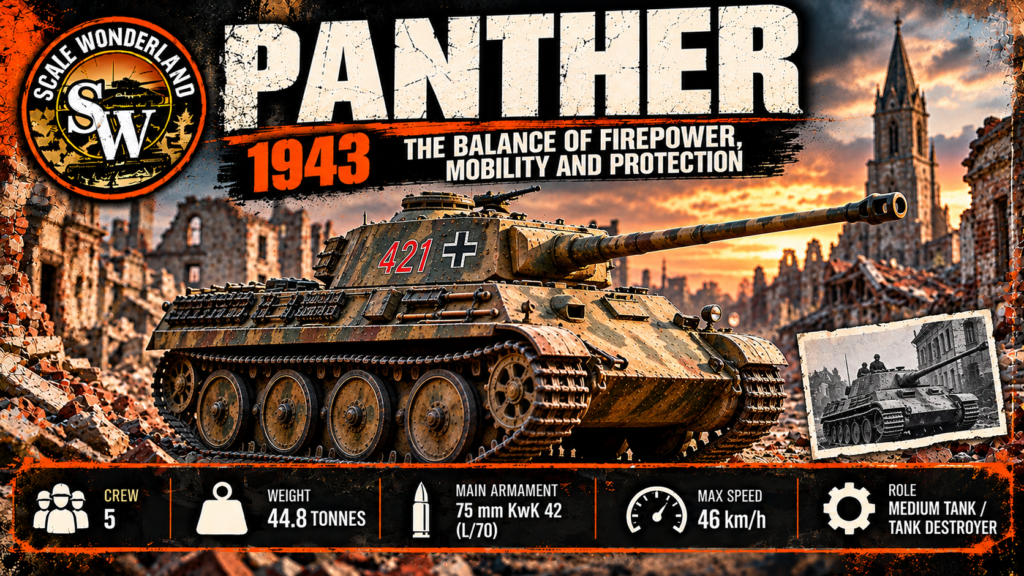
The Panther entered combat in 1943, influenced in part by German encounters with the Soviet T-34. Sloped frontal armor and the long 75 mm KwK 42 gave it strong anti-tank performance. Its early service, particularly around Kursk, was marred by mechanical troubles. The Panther was officially classified as a medium tank, despite being heavier than many contemporaries.
At a glance: Five crew; approximately 44–45 tonnes; 75 mm KwK 42 L/70.
Scale Wonderland modeling tip: Late-war camouflage can look spectacular, but verify the date and factory features of the Panther you’re depicting. Zimmerit is not appropriate on every vehicle.
Tiger II — The King Tiger
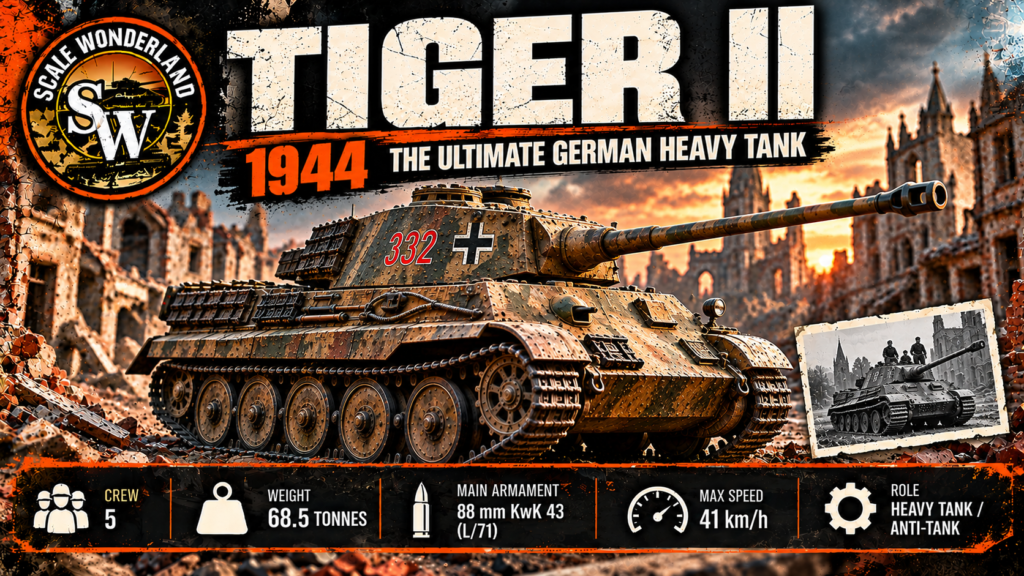
Introduced in 1944, the Tiger II combined thick sloped armor with the long 88 mm KwK 43. At nearly 70 tonnes, however, it placed extraordinary demands on transport, recovery, fuel, and maintenance. It embodied the strengths and limitations of Germany’s increasingly heavy tank designs.
At a glance: Five crew; approximately 69.8 tonnes; 88 mm KwK 43 L/71.
Scale Wonderland modeling tip: A heavy tank looks most convincing when it interacts with the terrain: compressed mud, realistic track contact, and stowage that makes sense for the scene.
What Really Changed?
The evolution of German armor wasn’t just about bigger guns and thicker plates. Early vehicles helped train crews and develop tactics. The Panzer III and IV became the backbone of armored operations, while the Panther and Tiger families offered greater firepower and protection at the cost of added complexity and logistical strain.
And that’s an important point for anyone studying military history: a tank’s performance in a duel is only one part of its battlefield value. Reliability, fuel, spare parts, crew training, and the ability to manufacture enough vehicles matter too.
From History to the Workbench
For me, this is where the hobby gets really interesting. A Panzer II in France, a Panzer III in North Africa, a Panther in Normandy, or a Tiger II in the final months of the war each tells a different story. That story should guide the camouflage, weathering, terrain, and even the little details we add to a model.
Want to bring your next build to life? Explore Scale Wonderland for practical scale-modeling tutorials, and check out our free weathering guide.
Which Panzer is your favorite to build? Let me know in the comments!
Every Model Tells a Story!
Scale Wonderland
Historical note: specifications above are representative of named variants; weights, weapons, and fittings varied by production version. This article discusses military history and modeling, not an endorsement of the regime that operated these vehicles.